Agustiyan: A Charming Script Font for Modern Branding Projects
It was a rainy Tuesday when I opened my design board for a new branding project — a small, artisanal coffee shop tucked into a quiet corner of the neighborhood. The brief was simple: create a visual identity that feels warm, inviting, and handcrafted. My first thought? Typography. I reached for Agustiyan, a script font I’d recently added to my collection. It promised charm, elegance, and a touch of handwritten authenticity — exactly what this project needed.
First Impressions: A Font That Feels Personal
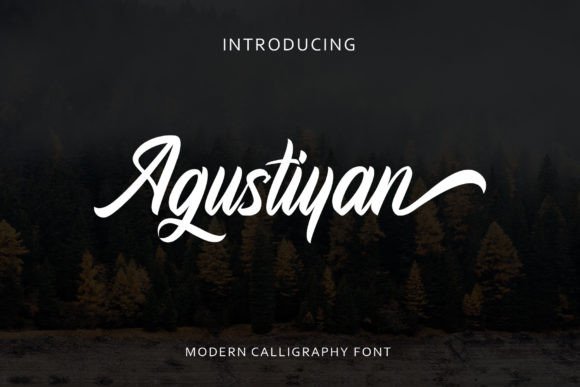
From the moment I typed out the shop’s name in Agustiyan, I knew it was a strong contender. The font has a natural flow, with soft curves and subtle variations that mimic real handwriting without feeling overly casual. It’s the kind of typeface that adds personality without shouting for attention — perfect for a brand that wants to feel approachable yet refined.
I started by placing it in the logo mockup. The lowercase letters have a gentle rhythm, and the uppercase letters offer just enough flourish to feel special without tipping into extravagance. The font includes ligatures and alternate characters, which helped me customize the logo to feel more unique and tailored to the brand.
Logo Design and Brand Identity
One of the first major uses of Agustiyan was in the logo design. I tested it in different sizes and weights, and found that it worked best at medium to large sizes — making it ideal for signage, packaging, and digital headers. It wasn’t meant for long blocks of text, but as a display font, it shined.
For the brand identity, I paired Agustiyan with a clean sans serif for body text and subheadings. This contrast helped establish a visual hierarchy while keeping the overall look modern. The script font became the emotional anchor of the brand — the part that made people feel like they were walking into a space that cared about the details.
Packaging and Print Materials
When it came time to design the packaging — from coffee bags to thank-you cards — Agustiyan continued to deliver. On product labels, it gave a sense of craftsmanship and authenticity. I used it for the shop’s name on the coffee bag and again on the small tag attached to handmade soaps they sold in-store.
It also looked great on business cards and greeting cards, where the handwritten feel added a personal touch. One thing I noticed was how well it held up in different print formats — from digital prints to foil stamping. The font’s strokes were clear and distinct, which helped maintain legibility even at smaller sizes.
Social Media and Web Design
On digital platforms, Agustiyan brought a sense of warmth and human connection. I used it in Instagram story templates for quotes and announcements, and it helped the brand stand out in a sea of generic fonts. In the website design, I placed it in the hero section as a headline font — again pairing it with a more neutral sans serif for supporting text.
It performed well across different screen sizes, and I made sure to test its readability on mobile devices. While it’s not a font I’d use for long paragraphs online, it was perfect for short, impactful text like headlines and callouts.
Font Pairing and Practical Tips
If you’re considering Agustiyan for your next branding project, here are a few practical tips based on my experience:
- Pair it with a clean sans serif like Montserrat or Lato to balance the script’s organic flow with modern structure.
- Use it sparingly — this is a font that shines when used for accents, headlines, or logo design, not for long-form content.
- Check the alternates and ligatures included in the font package — they can help you avoid repetition and add subtle variety to your design.
- Test it in multiple formats — print, web, signage — to ensure it performs well across all brand touchpoints.
What Makes Agustiyan Stand Out
As a script font, Agustiyan walks a fine line between elegance and approachability. It’s not overly ornate like some calligraphy fonts, nor is it too casual like many handwritten styles. Instead, it strikes a balance that makes it versatile for a wide range of creative projects — from wedding invitations to boutique branding.
What I appreciated most was its consistency. Whether I was using it on a small sticker or a large poster, the font maintained its character and readability. It felt like a reliable design tool — one that could adapt to different contexts without losing its personality.
Final Thoughts: A Font Worth Testing
If you're working on a branding project that needs a touch of elegance with a personal feel, Agustiyan is worth a closer look. It’s a script font that works well in both print and digital environments, and its versatility makes it a solid choice for designers who want to bring warmth and craftsmanship into their visual identity work.
Before committing to any font for a full brand system, always test it in multiple applications. Try it in your logo, on packaging mockups, in social media posts, and printed samples. Agustiyan passed every test I threw at it — and more importantly, it helped the brand feel more human, more memorable, and more connected to its audience.